存储
LangGraph 的 Store 提供跨线程的长期记忆能力,与按线程保存状态的 checkpointer 形成互补。
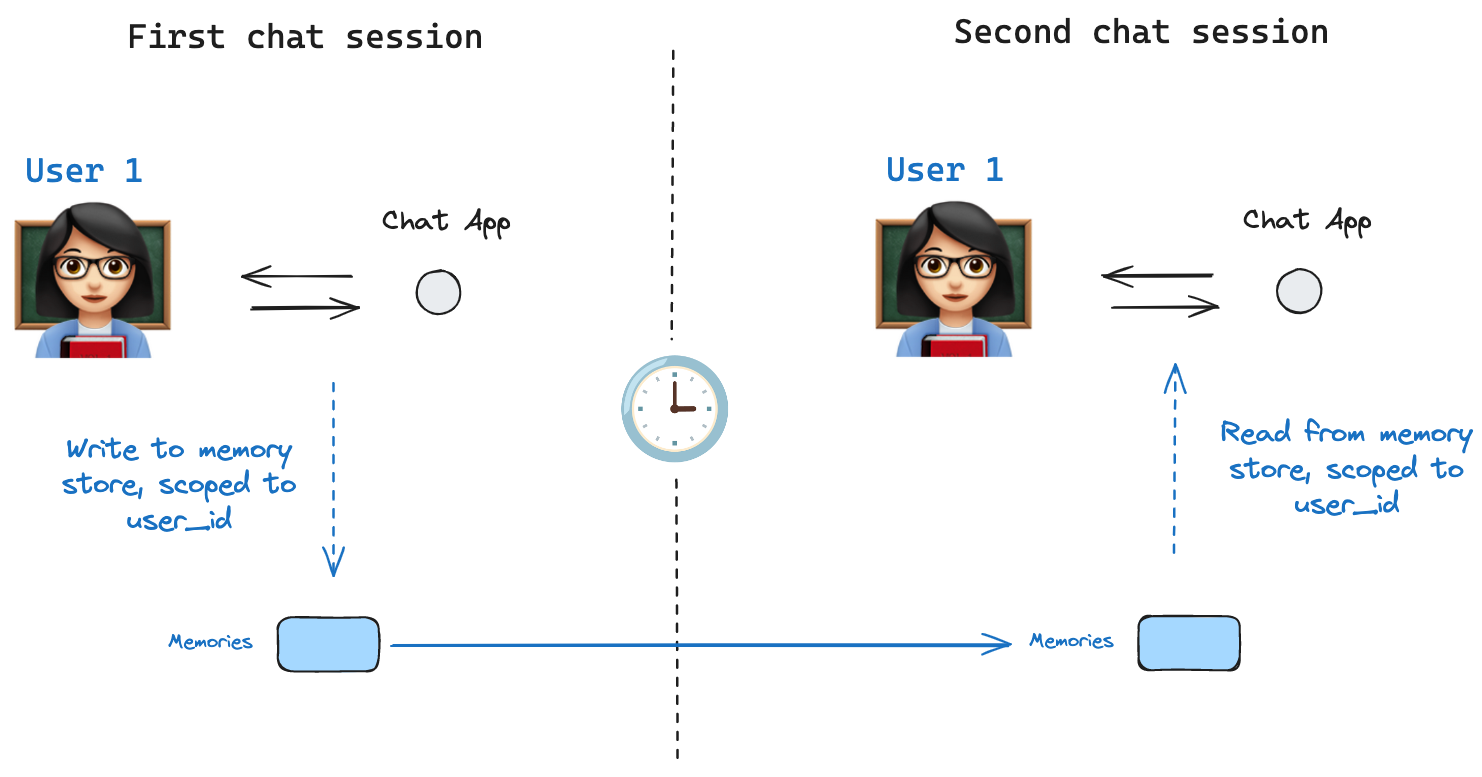
Store 让 Agent 能够跨线程持久化信息,包括用户偏好、积累的知识和需要在单次对话之外留存的事实。与检查点不同——后者保存的是作用域限于单个线程的完整图状态——而 Store 保存的是任意键值对数据,可以从任意线程访问。
Agent Server 自动处理存储
当你使用 Agent Server 时,无需手动实现或配置 store。API 会在后台自动处理所有存储基础设施。
选择合适的存储后端
InMemoryStore 适合开发和测试环境。生产环境请使用持久化存储,如 PostgresStore、MongoDBStore 或 RedisStore。所有实现都继承自 BaseStore,这也是你在节点函数签名中应该使用的类型注解。
基本用法
以下代码片段展示了在不使用 LangGraph 的情况下,独立使用 InMemoryStore:
import { MemoryStore } from "@langchain/langgraph";

const memoryStore = new MemoryStore();
记忆通过 tuple(元组)进行命名空间管理,在下面的例子中就是 (<user_id>, "memories")。命名空间可以是任意长度,可以代表任何含义,不一定要与用户相关。
const userId = "1";
const namespaceForMemory = [userId, "memories"];
使用 store.put 方法将记忆保存到 store 的命名空间中。指定上面定义的命名空间,以及记忆的键值对:键是记忆的唯一标识符(memory_id),值(一个字典)是记忆本身。
const memoryId = crypto.randomUUID();
const memory = { food_preference: "I like pizza" };
await memoryStore.put(namespaceForMemory, memoryId, memory);
使用 store.search 方法从命名空间读取记忆,它会返回给定用户的记忆列表,数量不超过 limit 参数(默认为 10)。使用 InMemoryStore 时,条目按插入顺序返回,因此最近插入的记忆排在列表最后;其他后端可能有不同的排序方式(参见列出到命名空间中的条目)。
const memories = await memoryStore.search(namespaceForMemory);
memories[memories.length - 1];

// {
//   value: { food_preference: 'I like pizza' },
//   key: '07e0caf4-1631-47b7-b15f-65515d4c1843',
//   namespace: ['1', 'memories'],
//   createdAt: '2024-10-02T17:22:31.590602+00:00',
//   updatedAt: '2024-10-02T17:22:31.590605+00:00'
// }
返回的记忆对象具有以下属性:
value:该记忆的值key:该记忆在当前命名空间中的唯一键namespace:字符串元组,该记忆类型的命名空间INFO
虽然类型是
tuple,但在转换为 JSON 时可能被序列化为列表(例如['1', 'memories'])。createdAt:该记忆创建时的时间戳updatedAt:该记忆更新时的时间戳
列出到命名空间中的条目
调用 store.search 时不传 query 和 filter 参数,会返回该命名空间前缀下存储的条目,数量不超过 limit。当你不需要语义排序时,可以用这个方法枚举命名空间中的所有内容。
// Return up to 100 items stored under ["alice", "memories"].
const items = await store.search(["alice", "memories"], { limit: 100 });
需要注意的三个行为:
namespace_prefix是按前缀匹配,不是精确匹配。("alice",)也会返回("alice", "memories")、("alice", "preferences")等命名空间下的条目。要限制在单一级别,请传入完整的命名空间或在客户端通过item.namespace过滤返回结果。- 超过
limit的结果会被静默截断。 没有溢出信号——请将limit设置为高于你预期的最大值,或使用offset进行分页。 - 默认排序取决于 store 后端。
PostgresStore和AsyncPostgresStore按updated_at降序返回结果(最近更新的在前)。InMemoryStore按插入顺序返回结果(最近插入的在后)。不要在不同实现间依赖特定排序;如果顺序很重要,请在客户端按item.updated_at排序。
对大型命名空间进行分页遍历:
const pageSize = 50;
let offset = 0;
while (true) {
  const page = await store.search(["alice", "memories"], { limit: pageSize, offset });
  if (page.length === 0) break;
  for (const item of page) {
    // ...
  }
  offset += pageSize;
}
要发现存在哪些命名空间(例如在列出所有用户的记忆之前先遍历所有用户),使用 store.listNamespaces:
// All namespaces that start with ["alice"], truncated to two levels deep.
const namespaces = await store.listNamespaces({ prefix: ["alice"], maxDepth: 2 });
语义搜索
除了简单的检索之外,Store 还支持语义搜索,让你可以根据含义而不仅是精确匹配来查找记忆。要启用此功能,请为 store 配置一个嵌入模型:
import { OpenAIEmbeddings } from "@langchain/openai";

const store = new InMemoryStore({
  index: {
    embeddings: new OpenAIEmbeddings({ model: "text-embedding-3-small" }),
    dims: 1536,
    fields: ["food_preference", "$"], // Fields to embed
  },
});
现在搜索时,你可以使用自然语言查询来找到相关记忆:
// Find memories about food preferences
// (This can be done after putting memories into the store)
const memories = await store.search(namespaceForMemory, {
  query: "What does the user like to eat?",
  limit: 3, // Return top 3 matches
});
你可以通过配置 fields 参数或在存储记忆时指定 index 参数来控制记忆的哪些部分被嵌入:
// Store with specific fields to embed
await store.put(
  namespaceForMemory,
  crypto.randomUUID(),
  {
    food_preference: "I love Italian cuisine",
    context: "Discussing dinner plans",
  },
  { index: ["food_preference"] } // Only embed "food_preferences" field
);

// Store without embedding (still retrievable, but not searchable)
await store.put(
  namespaceForMemory,
  crypto.randomUUID(),
  { system_info: "Last updated: 2024-01-01" },
  { index: false }
);
在 LangGraph 中使用
memoryStore 与 checkpointer 配合工作:如前所述,checkpointer 将状态保存到线程中,而 memoryStore 允许你存储可跨线程访问的任意信息。按以下方式同时使用 checkpointer 和 memoryStore 编译图:
import { MemorySaver } from "@langchain/langgraph";

// We need this because we want to enable threads (conversations)
const checkpointer = new MemorySaver();

// ... Define the graph ...

// Compile the graph with the checkpointer and store
const graph = workflow.compile({ checkpointer, store: memoryStore });
然后像之前一样使用 thread_id 调用图,同时还传入 user_id,它作为特定用户记忆的命名空间。
// Invoke the graph
const userId = "1";
const config = { configurable: { thread_id: "1" }, context: { userId } };

// First let's just say hi to the AI
for await (const update of await graph.stream(
  { messages: [{ role: "user", content: "hi" }] },
  { ...config, streamMode: "updates" }
)) {
  console.log(update);
}你可以从任何节点通过 runtime 参数访问 store 和 userId。可以用它来保存记忆:
import { StateSchema, MessagesValue, Runtime } from "@langchain/langgraph";

const MessagesState = new StateSchema({
  messages: MessagesValue,
});

const updateMemory: GraphNode<typeof MessagesState> = async (state, runtime) => {
  // Get the user id from the config
  const userId = runtime.context?.user_id;
  if (!userId) throw new Error("User ID is required");

  // Namespace the memory
  const namespace = [userId, "memories"];

  // ... Analyze conversation and create a new memory
  const memory = "Some memory content";

  // Create a new memory ID
  const memoryId = crypto.randomUUID();

  // We create a new memory
  await runtime.store?.put(namespace, memoryId, { memory });
};
你也可以从任何节点访问 store 并使用 store.search 方法获取记忆。记忆以对象列表的形式返回,可以转换为字典。
memories[memories.length - 1];
// {
//   value: { food_preference: 'I like pizza' },
//   key: '07e0caf4-1631-47b7-b15f-65515d4c1843',
//   namespace: ['1', 'memories'],
//   createdAt: '2024-10-02T17:22:31.590602+00:00',
//   updatedAt: '2024-10-02T17:22:31.590605+00:00'
// }
获取记忆后,你可以在模型调用中使用它们:
const callModel: GraphNode<typeof MessagesState> = async (state, runtime) => {
  // Get the user id from the config
  const userId = runtime.context?.user_id;

  // Namespace the memory
  const namespace = [userId, "memories"];

  // Search based on the most recent message
  const memories = await runtime.store?.search(namespace, {
    query: state.messages[state.messages.length - 1].content,
    limit: 3,
  });
  const info = memories.map((d) => d.value.memory).join("\n");

  // ... Use memories in the model call
};
如果你创建了一个新线程,只要 user_id 相同,你仍然可以访问相同的记忆:
// Invoke the graph
const config = { configurable: { thread_id: "2" }, context: { userId: "1" } };

// Let's say hi again
for await (const update of await graph.stream(
  { messages: [{ role: "user", content: "hi, tell me about my memories" }] },
  { ...config, streamMode: "updates" }
)) {
  console.log(update);
}跨线程记忆的关键:同一用户的不同对话线程共享同一命名空间下的记忆。新线程中也能读取到之前线程中保存的偏好和知识。
当你在本地使用 LangSmith(例如在 Studio 中)或使用托管版本时,基础 store 默认可用,无需在图编译时指定。但要启用语义搜索,你确实需要在 langgraph.json 文件中配置索引设置。例如:
{
    ...
    "store": {
        "index": {
            "embed": "openai:text-embeddings-3-small",
            "dims": 1536,
            "fields": ["$"]
        }
    }
}更多详情和配置选项,请参考部署指南。
下一步
- 向 Agent Server 添加自定义 Store — 部署你自己的实现
- 检查点 — 线程级别的状态持久化
本文基于 LangGraph 官方文档 翻译并二次创作。